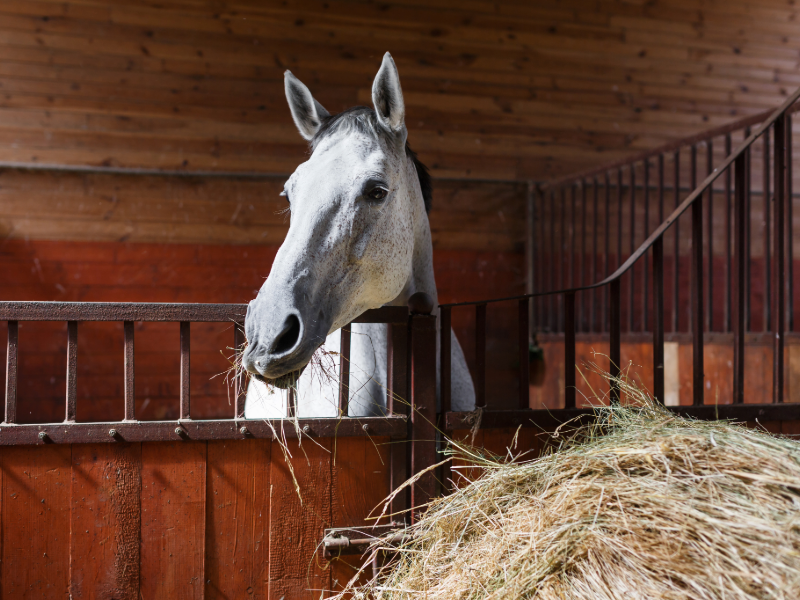
Walk into any barn, close your eyes, and take a breath. Chances are you can name half the smells before you open them again: sweet hay, oiled leather, sawdust, maybe a hint of horse sweat and grain.
Horse people perfume! More importantly, it’s valuable data if you know how to interpret it.
The air in your barn can tell you exactly how healthy that environment really is, often before anything else does.
The Smells That Mean “All Is Well”
Let’s start with the good stuff…
Fresh hay has a clean, sweet, slightly grassy smell — almost like sunshine got baled up along with the grass. That sweetness isn’t just pleasant; it’s a quality check. Good hay smells good. Musty, sour, or moldy hay is hay you don’t want in front of your horse, so that sweet smell is doing double duty as a freshness test every time you toss a flake.
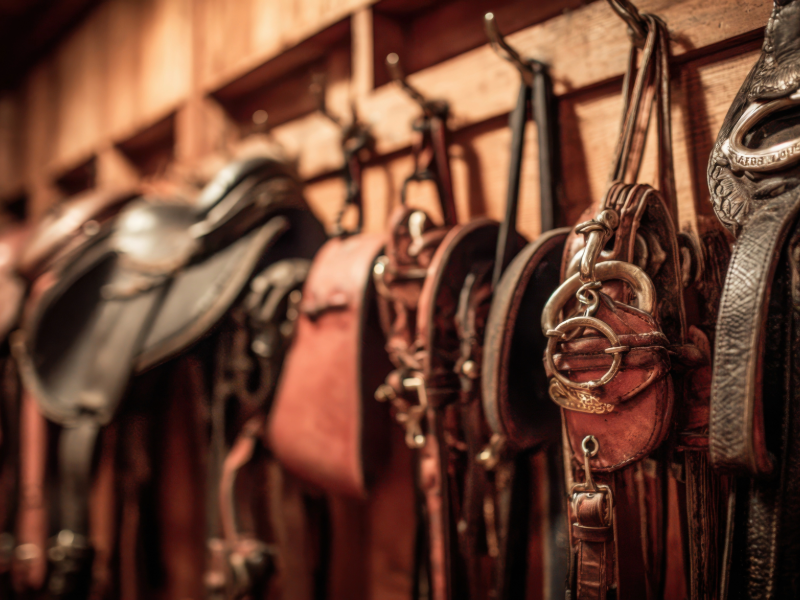
Leather tack, especially when it’s been cleaned and conditioned, has that rich, warm scent that’s practically synonymous with “barn.” It’s one of those smells that can transport you back twenty years the second you catch a whiff of it.
Fresh wood shavings carry a light, clean, almost sweet woodsy smell that a lot of horse people associate with a freshly bedded, well-kept stall. A stall that smells like fresh shavings usually is a freshly cleaned stall.
Put it all together — hay, leather, shavings, a little horse sweat and grain — and you’ve got the signature scent of a barn that’s being taken care of. And a well-cared for barn is key to a well-cared for horse.
The Smell That Should Make You Pause
Now for the smell every horse owner knows and nobody loves: that sharp, eye-watering tang of ammonia, usually rising up out of a stall that’s overdue for a good cleaning.
Here’s what’s actually happening: ammonia forms when bacteria break down the urea in horse urine. The wetter the bedding stays, the more ammonia gets produced. It’s not just unpleasant — it irritates eyes, skin, and airways, in horses and in the humans mucking their stalls.
Frighteningly, ammonia doesn’t spread evenly through a stall — it collects most heavily near the floor, right where your horse’s nose is while eating, resting, or lying down asleep. Research cited by equine vet Leona Bramall MRCVS found ammonia levels of 80 to 450 parts per million (ppm) within 12 inches of the floor in a well-managed stable — dropping to just 10–50 ppm around 5 feet up, roughly where a standing human’s nose is, and 0–15 ppm out in the aisle. Most people don’t start smelling ammonia until it hits around 30 ppm. So the faint whiff you catch standing in the aisle may be nowhere near what your horse is actually breathing down at floor level — especially overnight, when he’s lying down taking slow, deep breaths for several hours.
Chronic exposure to ammonia is linked to airway inflammation and coughing. It can aggravate or trigger conditions like equine asthma — with real consequences for comfort and performance. One widely cited veterinary consensus statement notes that respiratory problems affect over 80% of active horses, often without obvious symptoms. Dust and ammonia in the stable environment are named as leading culprits.
So — remember those pleasant-smelling wood shavings from a minute ago? Shavings feel cozy and smell nice on day one, but they’re also more prone to holding moisture and kicking up fine dust, both of which set the stage for ammonia buildup. The bedding that smells great when it’s new isn’t always the bedding that keeps your horse breathing easy over time.
And Then There’s the Manure Pile
If ammonia is the sneaky problem, a neglected manure pile is the obvious one. Beyond the smell, it’s a magnet for flies and a breeding ground for bacteria. Combined with wet bedding, it’s one of the biggest contributors to ammonia in the first place.
The fix isn’t glamorous, but it’s well established: pick stalls at least twice a day, do a full strip-and-clean at least weekly, keep air moving through the barn, and manage manure so it’s not piling up and stewing.
Following Your Nose to Better Solutions
The good news is that once your nose tells you something’s off, there are realistic and manageable solutions.
If dust and ammonia are the issue, it starts with bedding. Airlite Cardboard Bedding is made from clean, pre-consumer cardboard that’s dust-free and up to 5 times more absorbent than wood shavings. So instead of trapping moisture the way wood shavings can, it wicks it away and actively neutralizes ammonia odor at the source. Vets and top competitors alike have turned to it specifically for horses prone to respiratory or allergy issues, and it composts beautifully afterward.
If it’s more about disease control and lingering odors on surfaces — stall walls, tack, buckets — Thymox Botanical Disinfectant Spray is a great solution. It’s EPA-registered, made with thymol (derived from the herb thyme), and kills 99.9% of viruses, bacteria, and mold on contact. Thymox kill list includes the bugs behind EHV-1, equine influenza, and strangles. No harsh chemical smell left behind either — just a light botanical scent.
And for the manure pile itself, the Earth Flow Composting System takes the daily headache of manure management and automates it — mixing, aerating, and moving material so that instead of a stinking, fly-covered pile, you get usable, contaminant-free compost in as little as two weeks. Some barns even sell the finished compost as a bonus revenue stream.
Trust Your Nose
Your nose has been reading your barn’s health report all along — you just have to know what it’s telling you. The sweet smell of hay and leather means you’re doing something right. The sharp bite of ammonia or a ripe manure pile means it’s time to make a change, before it turns into a bigger issue for your horse’s lungs and yours.
The best barns don’t just smell good. They smell good because the fundamentals — bedding, cleaning, air quality — are being managed well. Trust your nose. It knows.