
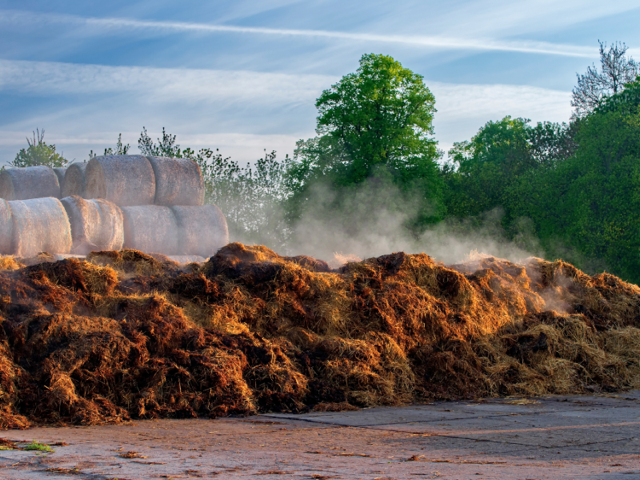
Hot weather can make manure management an urgent issue. Heat accelerates everything — decomposition, odor, fly breeding, and the spread of pathogens. Managed correctly, however, heat is critical to turning problematic manure piles into a resource – potentially even a revenue-generating resource.
What Summer Does to Manure Piles
Warm temperatures dramatically accelerate microbial activity in organic waste.
An unmanaged summer manure pile creates a cascade of problems:
Fly breeding explodes. House flies and stable flies can complete their entire life cycle — egg to adult — in as little as seven to ten days in warm weather. A wet, decomposing manure pile is their ideal breeding environment. Each female fly can lay hundreds of eggs, and a single neglected pile can generate thousands of flies per day.
Pathogens multiply. Heat-driven decomposition without proper temperature management is inconsistent. Unmanaged piles may heat in some areas but not others, leaving zones where harmful bacteria — including Salmonella and E. coli — survive and remain a contamination risk for horses, handlers, and the surrounding environment.
Odor intensifies. Ammonia and hydrogen sulfide off-gassing increases significantly in summer heat, affecting air quality in and around the barn. Horses with respiratory sensitivities feel this first.
Runoff risk rises. Summer storms hitting a saturated, uncontained manure pile send nutrient-laden runoff into soil and waterways — a growing regulatory concern in many states.
The solution isn’t to slow down composting. It’s to control it.
The Science of Hot Composting — and Why It Matters
Proper composting isn’t just decomposition. When managed correctly, a compost pile reaches internal temperatures of 130–150°F — hot enough to kill harmful pathogens, parasites, and weed seeds. But temperatures over 160°F can kill the microbes that do composting’s core function of breaking down organic material. When heat is carefully managed, the result is a sanitized, stable, nutrient-rich material that can be returned to the land safely.
The critical factor is aeration. Composting microbes need oxygen to thrive and generate heat. Without it, the process turns anaerobic — slower, cooler, stinkier, and far less effective at killing pathogens. The traditional solution is manual turning with a tractor or loader, which is labor-intensive, time-consuming, and easy to skip when barn life get busy.
Earth Flow Composting Systems are an ideal solution to these tricky management challenges.
Automation is Earth Flow’s Superpower


The Earth Flow Composting System is a physical containment and processing system that is ideal for manure management at equine and livestock facilities of any size. At its core is a rotating auger — an automated mechanism that continuously turns and aerates the composting material without manual labor.
That single feature changes everything about the composting process:
- Consistent aeration means composting microbes stay active and the pile reaches and maintains the temperatures needed to kill harmful bacteria
- Accelerated breakdown reduces the volume of material faster, shrinking the footprint of your manure management operation
- Automated moisture management, a critical variable because both too-wet and too-dry conditions stall the composting process
- Odor capture contains the off-gassing that makes traditional manure piles a nuisance for horses, handlers, and neighbors
The result is a system that does the hard work of composting management automatically — no tractor required, no skipped turnings, no guesswork.
In summer, when fly pressure is highest and pathogen risk peaks, the Earth Flow’s ability to consistently reach composting temperatures is especially valuable. A pile that reliably hits 130°F+ is a pile that’s actively eliminating the pathogens and reducing the organic odors that draw flies in the first place.
Compost as Grower’s Gold
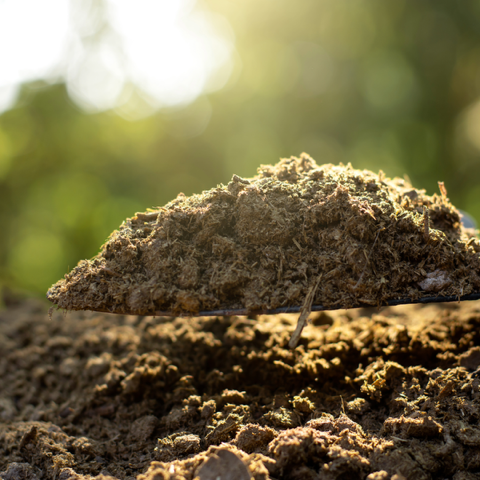
An effective system produces finished compost that’s genuinely useful. Properly composted horse manure is an excellent soil amendment — rich in organic matter, balanced in nutrients, and free of the pathogens and viable weed seeds that raw manure carries. It’s gold for farmers and gardeners!
Rather than paying to have manure hauled away, or watching an unmanaged pile grow into a liability, Earth Flow users produce material that can be spread on pastures or offered to neighboring farms and gardens. It reframes the entire manure equation — from a disposal problem to a sustainable output.
Summer Manure Management: A Practical Checklist
Whether or not you’re using an automated system, these principles apply to every barn this summer:
✅ Remove manure from stalls and paddocks daily — don’t let it accumulate in the heat
✅ Site your manure storage away from barn entrances, water sources, and prevailing breezes
✅ Ensure your pile or system has adequate drainage — soggy manure stalls the composting process and worsens odor
✅ If turning manually, aim for at least once per week in summer to maintain aerobic conditions
✅ Monitor internal pile temperature if possible — 130°F+ confirms pathogen-killing activity
✅ Consider an automated system like Earth Flow if labor, odor, or fly pressure is a recurring seasonal challenge
The Bigger Picture
Manure management isn’t a glamorous subject, but it’s one of the most consequential decisions a horse owner makes for the health of their animals, their property, and their neighbors. In summer, when every variable accelerates, having a system that works automatically and consistently isn’t a luxury — it’s sound barn management.
Earth Flow was designed for exactly that: to take one of the most labor-intensive, easy-to-neglect parts of horse keeping and make it reliable, efficient, and sustainable.
This post is part of Green Horse Brands’ summer barn management series. Find tips for keeping horses healthy in the heat here.