
Summer brings long riding days, early mornings in the barn, and a season full of shows and trail rides. It also brings some of the most challenging horse keeping conditions of the year. From stall hygiene to pathogen control, heat and humidity challenge every aspect of maintaining healthy horses.
Careful planning and picking the right stable products help keep horses healthy and happy through the sizzling season.
Summertime & the Living Is Easy…Not!
Easy summer days make for a great song lyrics, but for horses, hot weather is anything but easy.
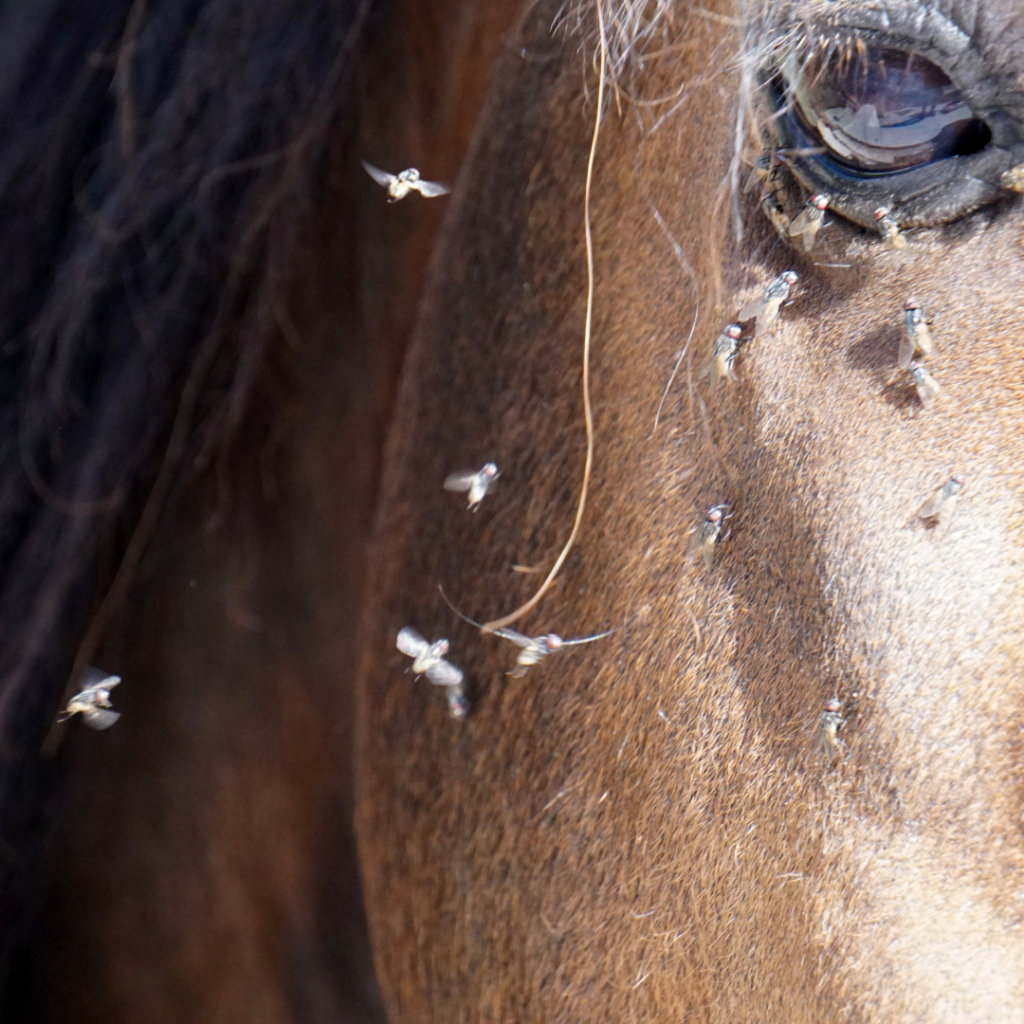
Heat and humidity create the perfect environment for bacteria, ammonia, mold, and insects to thrive. Manure decomposes faster in warm weather, releasing more ammonia into the stable environment. Flies breed aggressively in wet, organic material. When its cooler inside than out, horses spend more time in their stalls — which means bedding goes bad faster and air quality matters more than ever.
The challenges stack up quickly:
- Ammonia buildup irritates airways and eyes, especially in horses prone to respiratory issues. If you can smell ammonia, it’s already at a harmful level.
- Excess moisture in bedding encourages thrush, rain rot, and skin infections
- Heat stress lowers immune resilience, making horses more vulnerable to pathogens
- Flies increase, increasing disease transmission risk and annoying horses and their people
Fortunately, these are manageable issues.
Airlite Cardboard Bedding Solves Summer Stall Problems
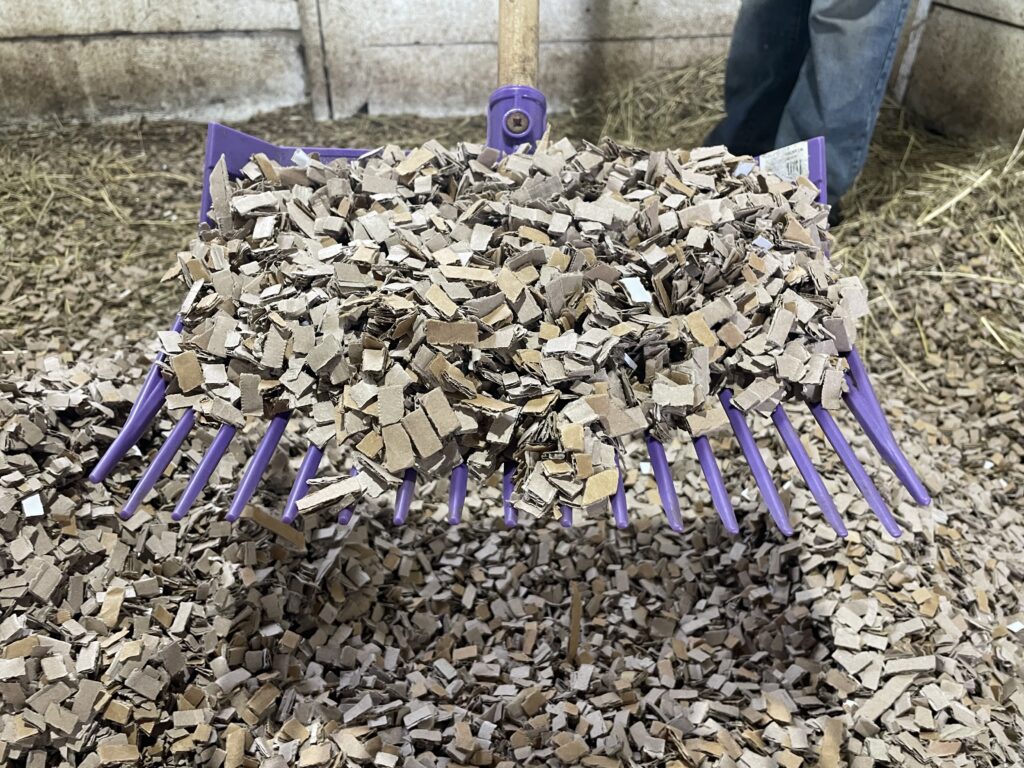
Traditional bedding can worsen summer stall issues. Wood shavings can contain dust – or quickly break down to dust. And they compress over time, creating wet, anaerobic pockets where bacteria and ammonia thrive. Summer heat intensifies these conditions.
Airlite Cardboard Bedding functions differently.
Made from clean, contaminant-free pre-consumer cardboard, Airlite is virtually dust-free and it maintains its structure without quickly breaking down to dust. Airlite is highly absorbent, soaking up moisture quickly and locking it away from the surface.
Airlite ensures…
- Drier stall floors even during high-humidity summer months
- Neutralized ammonia.
- Less frequent full stall cleanouts — Airlite’s absorbency means few wet spots to remove and longer lasting clean bedding.
For horses stalled to avoid summer heat, the air quality improvement is especially significant. Lower ammonia levels and fewer respirable particles support respiratory health.
Practical tip: In summer, focus daily stall checks on urine spots (which develop faster in heat) and focus on refreshing the areas of the stall where your horse tends to stand or lie down. Airlite’s structure makes it easy to identify soiled bedding and isolate it for easy removal.
Thymox Botanical Disinfectant: Fighting Summer Pathogens Where They Live
Summer horse shows, social rides, shared water troughs, and busy barn traffic all increase pathogen exposure. Add heat to the mix and bacteria multiply faster and the risk of disease transmission rises.
Thymox is built for this environment.
Thymox is powered by thymol, the active compound derived from thyme oil. It’s proven effective against a broad spectrum of bacteria, viruses, and fungi — including those most relevant to equine health.
Unlike bleach or harsh chemical disinfectants, Thymox is:
- Horse-safe — no harsh fumes that linger in enclosed stall spaces
- Botanically derived — better for horses, handlers, and the environment
- Kills common equine pathogens, including EHV-1 and those responsible for strangles, equine influenza, and fungal skin conditions
- Easy to use — spray on and walk away
Use Thymox here:
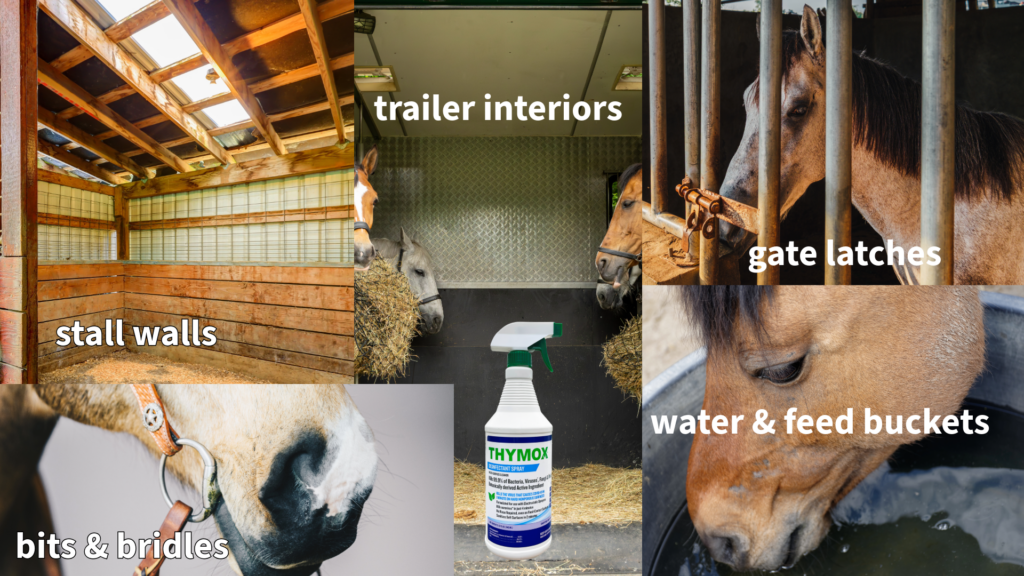
- Stalls and water buckets: Between horses and after illness, spray all surfaces before introducing fresh bedding or water.
- High-touch surfaces: Gate latches, cross-ties, wash rack mats, and feed buckets are all pathogen transfer points — aka “fomites.” This is especially true during summer show season when barn traffic is high.
- Trailer interiors: A quick Thymox spray in between horses reduces the risk of carrying pathogens from one facility to another.
- Fly attraction points: This is an often-overlooked summer strategy. Flies — including the species that cause the most harm to horses — are drawn to organic residue, moisture, and odor on barn surfaces. Regular disinfection of waterers, feed areas, stall mats, and manure collection zones removes the organic material that attracts flies in the first place. A cleaner barn environment is a less inviting one for flies looking for a place to land and breed.
New World Screwworm Intensifies Importance of Fly Awareness
The horse world went on high alert with the June 3, 2026 confirmation of New World Screwworm (NWS) in a calf in Texas. It’s the first domestic detection since the pest was eradicated in 1966, and USDA-APHIS is actively monitoring and responding.
New World Screwworm flies lay eggs in the wounds and body openings of living animals. The larvae burrow into living tissue, causing serious damage that can be fatal if untreated. Horses are among the vulnerable species.
From a barn management standpoint, general fly reduction is the first line of environmental defense. Screwworm flies, like other fly species, are attracted to organic odors and residue. Keeping barn surfaces, water areas, and feed zones clean and regularly disinfected with Thymox reduces the organic attractants that draw flies into your horses’ environment in the first place.
For current updates on the NWS situation, visit aphis.usda.gov or screwworm.gov.
Manure Management Is Harder in the Heat
Summer heat accelerates manure decomposition, and decomposing manure in the paddock or manure pile is a primary breeding ground for flies. And even without the disease-transmission risk flies pose, these pests irritate and stress most horses.
Wet, hot manure piles can reach internal temperatures high enough to kill beneficial composting microbes, creating an unmanaged mess that attracts more pests and breeds more pathogens instead of breaking down the material to clean, healthy compost.
This is where a composting system makes a real difference. Green Horse Brands’ Earth Flow Composting System is designed to manage equine waste in a controlled, efficient way — turning a summer problem into a sustainable solution. Stay tuned for an upcoming post on summer manure management tips.
Summer Stable Checklist
Keep your horses healthy and your barn running smoothly with these summer priorities:
- ✅ Switch to or maintain Airlite Cardboard Bedding for drier, lower-ammonia stalls
- ✅ Disinfect stalls and high-touch surfaces weekly with Thymox Botanical Disinfectant
- ✅ Increase stall checks during hot, humid stretches — soiled bedding builds up faster
- ✅ Disinfect water buckets and troughs at least twice weekly in summer heat
- ✅ Clean trailer interiors with Thymox after every haul, especially during show season
- ✅ Reduce fly attractants by keeping barn surfaces and organic residue zones clean and disinfected
- ✅ Check horses daily for wounds or signs of fly activity — and stay informed on the New World Screwworm situation – especially if you’re in the Southwest where the first cases occurred in June of 2026.