

Photo: Shelley Paulson
How your choice of animal bedding affects the air your horse breathes every day
Even in the best-kept barns, dust is evident everywhere — tack trunk tops, rafters, and boots that were spit-shined just a second before walking into the stable. But that’s not the dust we need to worry about most when it comes to our horses’ respiratory health. It’s the particles too small to see that pose the greatest risk.
A peer-reviewed clinical study* published in the Veterinary Journal (Kirschvink et al., 2002) took a close look at exactly this issue — and the findings are a must-read for all of us who keep and care for horses.
The Hidden Hazard: Respirable Dust
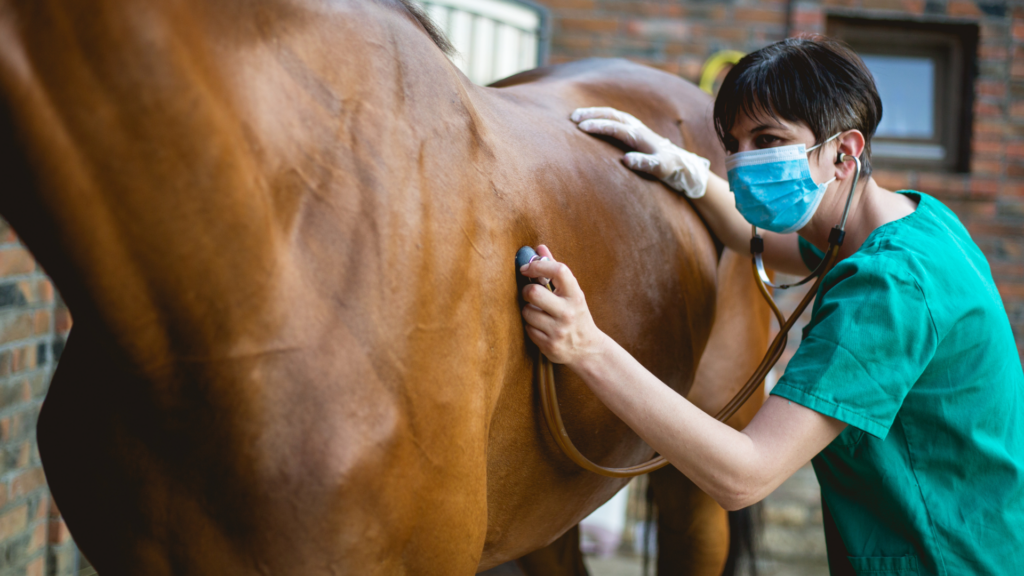
Not all dust is created equal. Large dust particles — the ones we can see — get filtered out in the nose and upper airway. But respirable dust particles — the ones we don’t see — are small enough to travel deep into the lungs, where they can trigger inflammation, allergic responses, and over time, serious respiratory conditions.
For horses, one of the most significant of these conditions is heaves — also known as severe equine asthma. It’s the equine equivalent of chronic asthma in humans, and like human asthma, environmental triggers play a major role. Dusty bedding is one of the most common culprits.
What the Research Found
The University of Liège research team set out to answer a simple but important question: Does bedding type significantly affect the amount of respirable dust a horse is exposed to?
The short answer: yes, dramatically.
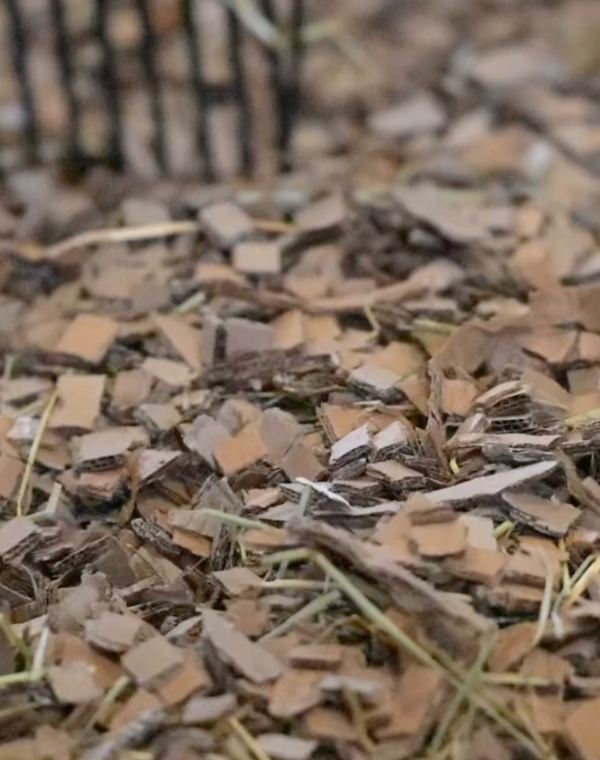
When researchers measured airborne respirable dust particles from common bedding materials and compared them to shredded cardboard bedding, the concentrations from cardboard were found to be significantly lower — not just a modest improvement, but a meaningful, statistically confirmed difference.
They didn’t stop at lab measurements either. The study followed six horses already diagnosed with severe equine asthma and stabled them on cardboard bedding for two months. Pulmonary function was tested before, during, and after. The result? Lung function during the cardboard bedding period remained comparable to the horses’ baseline measurements taken while at pasture, and significantly better than when the same horses were kept on conventional bedding.
In other words, the bedding alone made a measurable difference in respiratory health outcomes.
Why This Matters for Every Horse — Not Just Heaves Cases
It’s easy to think of respiratory conditions as something that only affects “problem horses” — those already diagnosed with heaves or allergies. But respiratory health exists on a spectrum.
Chronic low-level dust exposure can:
- Reduce athletic performance in competition horses
- Cause subclinical airway inflammation that goes unnoticed until it becomes a bigger problem
- Irritate the airways of barn workers and horse owners too
Proactive management of barn air quality is one of the most impactful — and often overlooked — things we can do for our horses’ long-term health.
The Bedding Connection
Bedding is one of the largest contributors to barn dust levels, and it’s also one of the most controllable variables in our management routine. The study’s conclusion was clear: cardboard animal bedding, used alongside low-dust forage, can be an effective part of a minimum-dust management approach for horses — particularly those with existing respiratory sensitivity.
The researchers specifically noted that the combination of low-dust bedding and low-dust forage (like haylage or grass silage rather than dry hay) produced the best outcomes. Bedding is one piece of the puzzle — but it’s an important one.
A Simple Change with Real Impact
We don’t have to overhaul our entire barn management routine to make a difference. Switching to a dust-free animal bedding option is a straightforward change that the science suggests can have a genuine impact on the air our horses breathe every day.
If you’re managing a horse prone to respiratory issues, dealing with equine asthma, or simply want to be proactive about long-term lung health, it’s worth looking closely at bedding’s contribution to barn dust — and doing something about it.
Our horses can’t tell us their lungs hurt. But the research can tell us what to do about it before they do.
Airlite Cardboard Animal Bedding is designed to support healthier barn air — for horses and the people who care for them. Made from clean, pre-consumer cardboard, it’s a low-dust alternative to conventional bedding that puts respiratory health first.
Reference: Kirschvink N, Di Silvestro F, Sbaï I, Vandenput S, Art T, Roberts C, Lekeux P. “The use of cardboard bedding material as part of an environmental control regime for heaves-affected horses: in vitro assessment of airborne dust and aeroallergen concentration and in vivo effects on lung function.” Veterinary Journal. 2002 May;163(3):319-25. doi: 10.1053/tvjl.2001.0658. PMID: 12090775.