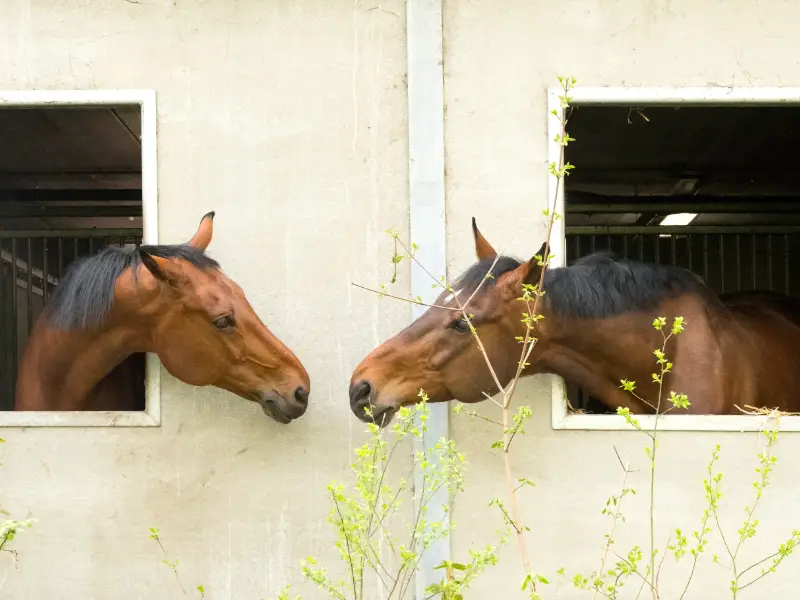
At a busy horse show, two horses stabled side by side stretch their necks over the stall partition and touch noses. It takes a second, and neither owner sees it. If one of those horses is carrying an infectious disease, most likely without showing any sign of it, the other has just been exposed.
Moments like that are beyond any horse owner’s control. What can be managed is how well prepared the horse’s own defenses are when exposure happens. Much of that preparation takes place in the respiratory tract, and it depends heavily on the quality of the air a horse breathes at home.
This article explains how the equine airway protects against disease, what research says about the damage fine dust can do, and why bedding is one of the most practical places to make a difference.
An Athlete Built Around Breathing

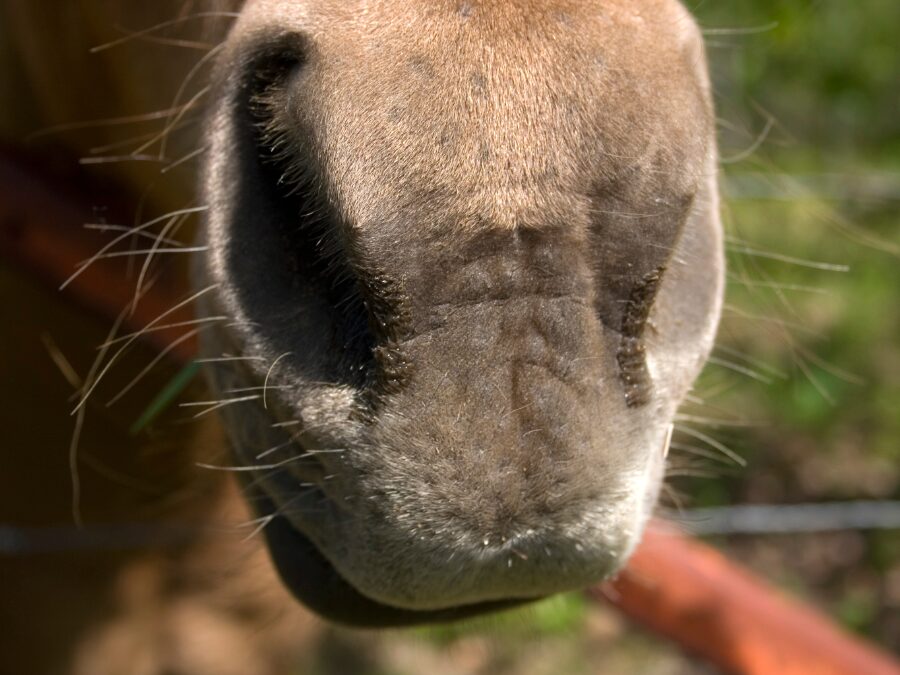
Horses breathe only through their noses – they’re “obligate nasal breathers.” This makes their nostrils the single entry and exit point for the entire respiratory tract. A great deal of the outside world comes in that way.
The volume of air is considerable. A horse at rest moves about 80 liters of air per minute. At full exertion, each breath in and out takes less than half a second, and the total climbs past 1,800 liters per minute. Every part of the equine respiratory system is designed to bring in large amounts of oxygen and carry away carbon dioxide.
This capacity is what allows horses to cover long distances at speed. It also explains why breathing is the limiting factor in athletic performance. Even a small problem in the airway can show up as a horse that tires sooner or recovers more slowly than it should.
That rail at the end of a long show jumping track? The cow that got away at the end of a cutting horse’s 2.5 minute run? A pooped-out piaffe in the dressage court? These could all be early, subtle signs of compromised respiratory function.
How the Airway Defends Itself
With that much air coming in, the respiratory tract needs its own security system. The first line of defense is the mucosa, the layer of cells lining the trachea, where air travels from the nose to the lungs.
The mucosa protects the horse in three main ways:
• Mucus traps pathogens, dust and gases before they reach the lower airways. It also has antimicrobial and antioxidant properties.
• Tight junctions between cells hold the lining together and form a physical barrier that keeps pathogens from slipping through.
• Antimicrobial peptides, small proteins produced by the lining, help neutralize bacteria and viruses on contact.
When this lining is intact, it turns away many of the microscopic particles a horse inhales. When it’s irritated or damaged, the barrier weakens.
When Does Exposure Become Infection?
Research at Ghent University in Belgium put a finer point on that weakness. Working under the supervision of virologist Professor Hans Nauwynck, doctoral researcher Jolien Van Cleemput studied how the respiratory mucosa, airborne pathogens and inhaled particles interact. Her findings showed that horses with damaged mucosal cells are more likely to become infected with equine herpesvirus, or EHV.
EHV is among the most feared pathogens in the horse world. It is present nearly everywhere horses are and exists in nine known types. Horses live with most of them without trouble, but the less common neurological form has periodically caused serious and sometimes fatal outbreaks. The virus is highly contagious and spreads mainly through direct contact, including the kind of nose-to-nose greeting that happens over a stall wall.
The takeaway from the Ghent research is that exposure is only half the equation. The condition of the airway lining helps determine whether exposure turns into infection.
Why Fine Dust Matters
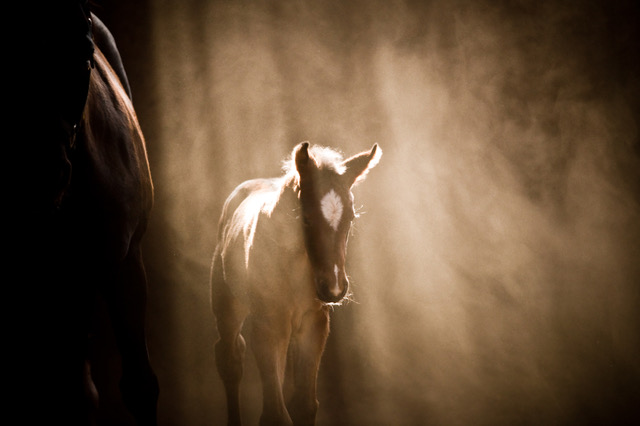
A particle does not have to carry disease to cause harm. The smallest ones, under 5 microns across, are invisible to the eye and light enough to travel past the nose and settle deep in the airways and lungs. There they trigger inflammation, which narrows the airways and interferes with the transfer of oxygen into the bloodstream and the removal of carbon dioxide.
That inflammation also wears on the mucosa. A lining that is busy coping with a steady supply of irritants is less able to do its job when a real pathogen arrives.
In a barn, these problematic particles come from several places: forage, arena footing, manure, ammonia from urine, poor ventilation and bedding. Bedding deserves particular attention because of how much time a stabled horse spends with it. Horses eat with their heads down, lie in their bedding to rest, and stir it up each time they move around the stall. Every one of those moments puts the nostrils inches from whatever the bedding releases into the air.
Where Bedding Comes In
Of all the sources of airborne particles in a stable, bedding is among the easiest to change. A barn’s ventilation is built in, and arena footing is a major investment. Bedding is replaced constantly, so switching to a cleaner material is a decision that can be made with the next delivery.
Dust-free bedding removes a constant source of irritation from the horse’s breathing zone. With fewer fine particles to cope with, the mucosa is under less strain and better able to stay intact. For a healthy horse, that supports the natural defenses described above. For a horse recovering from a respiratory illness, cleaner air means the body is not spending energy fending off dust while it heals.
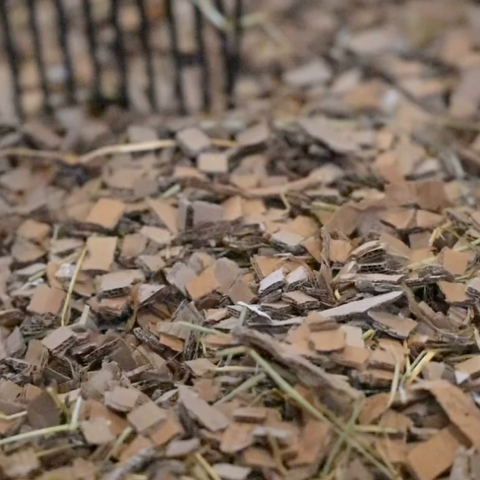
Airlite Cardboard Bedding is made from pre-consumer cardboard that has never been through the recycling stream, so it contains no contaminants. It is dust-free and hypoallergenic, which makes it a good fit for horses with sensitive airways.
Bedding does not prevent infectious disease on its own, and it’s no substitute for vaccination, biosecurity and veterinary care. Its role is supportive: it helps keep the horse’s first line of defense in working order.
Controlling the Controllable
No management program can guarantee a horse will never meet a virus. The horse in the next stall at a show, a new arrival at the barn, or a shared water bucket can all bring exposure that no one sees coming. A healthy respiratory tract gives the horse its best chance of handling that exposure, and the air inside the stall is a large part of what keeps it healthy.
Reducing dust at its source is a practical first step, and bedding is a sensible and feasible place to begin.
Cited research: Van Cleemput, Jolien. (2018). The horse’s respiratory mucosa, airborne pathogens and respirable hazards: the archetypical trifecta of co-evolution. Ghent University, Faculty of Veterinary Medicine, Merelbeke, Belgium.