
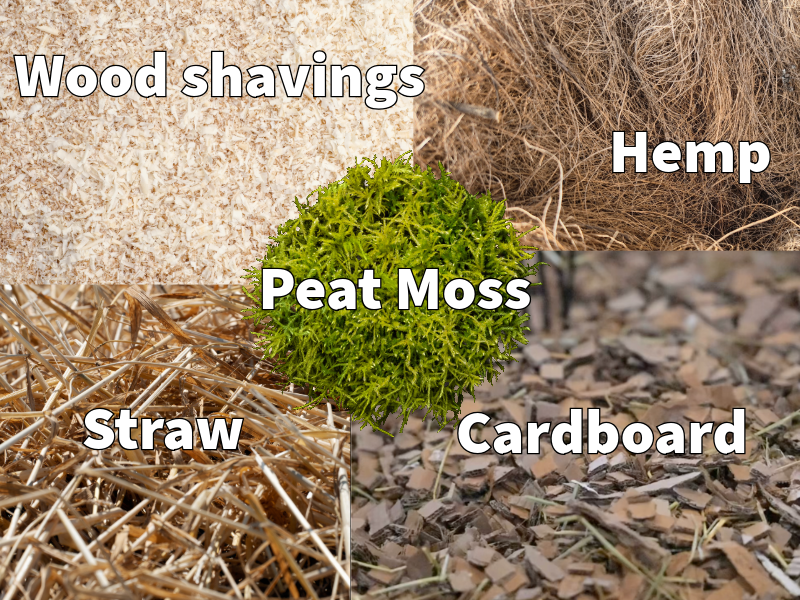
Bedding may be the barn’s ultimate workhorse. It’s built-in climate control, a mattress, a diaper, and an air filter all rolled into one. Bedding’s back story begins with the domestication of animals. Its evolution involves agriculture, chemistry and stubborn barn traditions.
Its future can align with the growing emphasis on planet-friendly practices thanks to innovations like bedding made of pre-consumer cardboard that enhances the composting process.
Here’s how this multi-tasking component of animal care has evolved over the years.
Straw: The Original Bedding
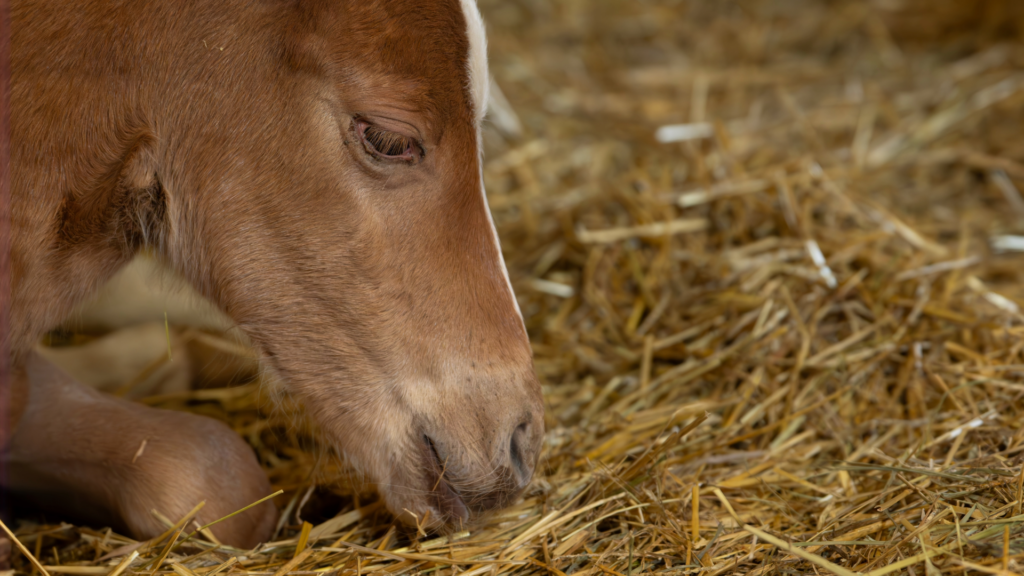
Straw is where this story starts, because straw is where farming starts. Wherever people grew wheat, barley, oats, or rye, the leftover stalks became bedding. It was cheap, local, and already in the barn.
A 13th-Century horse-training manual describes colts tied to the manger on straw. Centuries later, 18th- and 19th-century grooms had turned it into a genuine system: a shallow bed by day to encourage a horse to lie down and urinate – or “stale” as it was politely called back then. A deep bed of straw was banked up against the walls at night for warmth, cushioning, and to prevent the horse getting a leg caught on a wall – aka “cast.”
That banked, deep-litter approach is the ancestor of every stall bedding routine still used today. Straw bedding is still a tradition for foaling stalls, because a newborn foal is far less likely to inhale straw dust into fragile lungs than finer materials.
Straw’s big limitation hasn’t changed in 800 years either – it’s bulky, doesn’t absorb much, and a bored or hungry horse will eat it — which can be a colic risk.
The Sawdust and Shavings Era: North America Builds a New Supply Chain

As North American lumber milling scaled up through the 1800s and 1900s, sawmills generated an enormous byproduct stream — sawdust, then wood shavings. Especially in regions without much grain farming nearby, barns started bedding down on it instead of straw. It was cheap, it was local to their timber country, and it absorbed far better than straw.
Wood shavings remain a common choice across North America, with limitations — black walnut shavings are genuinely toxic to horses (linked to laminitis), and red maple, oak, and yellow poplar carry their own warnings. What kind of wood and where it came from are critical. Some horses even react to cedar.
Wood shavings also increase dust levels in the barn, especially as they break down to small particles under the weight of horses.
Later in the 20th century, compressed wood pellet bedding showed up as a denser evolution of loose shavings. They shipped more compactly, expanding on contact with moisture. Pellets initially contain less dust, but quickly break down to dust as horses walk and lay down on them.
The Imports: Peat, Flax, and Hemp Cross the Ocean
Some of the more interesting chapters in animal bedding history are the ones that migrated. Peat moss bedding has deep roots in Nordic and Baltic countries, where bogs make it locally abundant, and it eventually caught researchers’ attention for a very practical reason: a Finnish study of 32 riding-school horses found that horses bedded on peat developed noticeably less airway inflammation than horses on wood shavings — a real data point for barns managing asthma or “heaves.”
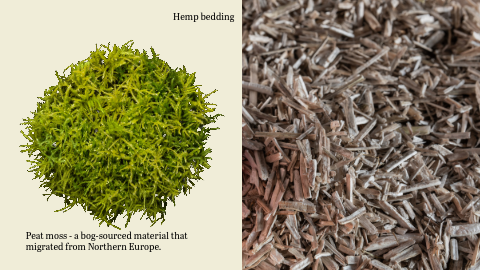
Flax straw bedding followed a similar migration. It was already common across Europe and Canada — a natural byproduct of flax and linen processing — before it was introduced to U.S. horse owners in any dedicated way around 2015. Hemp bedding tells a parallel story: long used agriculturally in Europe, it found its way into North American stables as hemp cultivation was re-legalized on this side of the Atlantic, bringing an absorbent, low-dust option with a sustainable growing footprint.
Why Owners Actually Choose What They Choose
Like it or not, corners of the horse world can be stuck in traditions, especially when it comes to bedding. And sometimes we mistake what looks nice to us – fluffy white shavings – for what’s healthiest for our horses.
Absorbency, cost, dust and ease of picking rank high on practical horse owners’ reasons for their bedding choices.
Absorbency is about more than tidiness and easy mucking. Ammonia — produced when bacteria break down urine in wet bedding — starts affecting a horse’s lungs at levels so low humans won’t even smell it yet. If a barn smells like ammonia, the horses in it are probably inhaling an unhealthy amount of it – and for a long time.
Awareness of the respiratory risks posed by dust particles is increasingly influencing bedding decisions. Respiratory problems – conditions on the Equine Asthma Spectrum – are among the most common health problems for stabled horses. Even before symptoms are obvious, compromised airway and lung function can significantly decrease performance and affect well-being.
Reducing airborne dust is equine veterinarians’ top recommendation for protecting respiratory health. That entails low dust bedding and forage, and ensuring ventilation to move particles out of the breathing zone.
When horse health concerns trump traditions, the quest for materials that manage moisture, ammonia and airborne particles gets intense.
The Newest Chapter: Cardboard Bedding
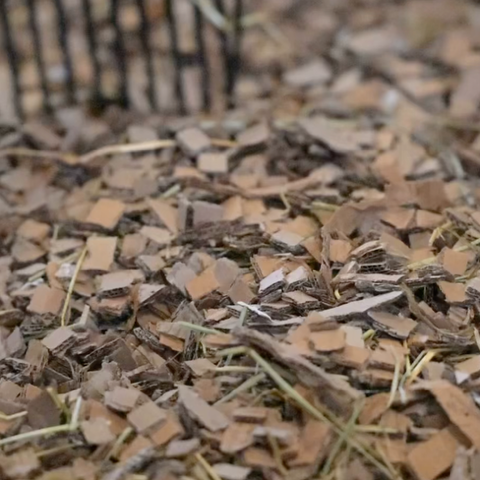
Which brings us to the newest material in this whole timeline. Compared to straw (millennia old), shavings (over a century in North American barns), or even peat and flax (decades of European use before crossing over), cardboard bedding barely has a history yet.
The earliest real research on it dates to a 2002 study testing cardboard specifically as an environmental-management tool for horses with heaves — measuring both airborne dust levels and actual lung function.
A 2016 “consensus statement” on Inflammatory Airway Disease in horses describes cardboard bedding – along with low dust hay and ventilation – as key to preventing respiratory problems.
Cardboard bedding innovation is essentially the wood-shavings story repeating itself with a different waste stream: an industrial byproduct that turned out to be an excellent, highly absorbent, low-dust bedding material. The fact that cardboard bedding, if it’s made of pre-consumer material, is excellent for composting aligns it with environmentally sustainable horse keeping.
Green Horse Brands’ Airlite Cardboard Bedding, launched in 2015, is currently the only widely distributed cardboard bedding brand in North America. International equestrians were the first to embrace it as important to a dust-free environment for their equine athletes. Cardboard bedding is increasingly recommended by equine veterinarians as part of respiratory health strategies.
The Bedding Story Isn’t Over
Straw gave way to shavings. Shavings gave way to pellets. Peat, flax, and hemp crossed oceans. And now cardboard is quietly writing its own chapter in barns across North America.
If there’s one throughline across a thousand years of stall bedding, it’s this: the “best” bedding has never been a fixed answer — it’s whatever material best balances absorbency, dust control, cost, and ease of use. As today’s horse owners add planet friendliness to that list, clean, dust-free cardboard looks likely to dominate the story for many years to come.