
Kentucky 5★ · Horsemanship · Stable Management
The Horsemanship Behind Gabby Dickerson’s Kentucky 5★ Journey
How years of mentorship, patient horse development — and smarter horse bedding choices — built a 5-star partnership.

When Gabby Dickerson steps into the start box at the Defender Kentucky Three Day Event 5★, it will be the culmination of nearly two decades of deliberate, disciplined horsemanship. The 30-year-old eventer from Gordonsville, Virginia, isn’t chasing a moment — she’s built a whole career to earn one.
At GreenHorseBrands, we’re drawn to athletes who put their horses first. Gabby is exactly that kind of horsewoman, and her story holds real lessons for anyone serious about performance horse care — from the mentors you choose to the horse bedding in your trailer.
“I just always believed that if I kept working at it, and taking opportunities to make connections, I could catch up. Hopefully, that’s what’s happening now.”
— Gabby DickersonThe Foundation
Horsemanship Learned From the Best
Gabby’s path to Kentucky began at age 11 on the hallowed grounds of the Kentucky Horse Park, where she first worked alongside U.S. Olympian Kim Severson. By 12, she had left her family home on North Carolina’s Outer Banks to train with Kim full time — an equine education, as her parents put it, long before online schooling became mainstream.
At 17, she crossed the Atlantic to work with British Olympian Nicola Wilson — a move that started, like so many great partnerships, with a single clinic. “I could just tell she was going to be a great person to spend time around,” Gabby recalls. That instinct proved right. She then had shorter stints working for German legend Ingrid Klimke and Olympian Dirk Shrade before returning to the United States at 20 to start her professional career.
That depth of international exposure shaped not just Gabby’s riding, but her entire philosophy of horse care. European horsemanship tends to be methodical and horse-centered, and those values are woven into everything she does at Milltop Farm in Virginia today.
The Partnership
Building “Ken” — Horse Development Done Right
Gabby’s Kentucky partner, Traditionally Fernhill — known around the barn as “Ken” — is a 12-year-old Irish Sport Horse she acquired in early 2024. He arrived with a single 4*-Short outing to his name. Rather than rushing him, Gabby leaned on everything she had learned: systematic conditioning, expert coaching, and an unwavering focus on the horse’s readiness over competitive ambition.
The results speak to her horsemanship. Ken delivered an 8th-place finish at their 4*-L debut at Tryon International. The pair then completed a strong 4*-L at Morven Park — a course Nicola Wilson herself called worthy of 4.5★ status. And it was experience gained through Ken that helped Gabby simultaneously bring three other horses to CCI4* level.
That kind of development — patient, principled, and horse-first — doesn’t happen by accident.
Mentorship as Method
Nicola Wilson remains a central presence in Gabby’s program. WhatsApp videos cross the Atlantic regularly for schooling critiques. Nicola visits the U.S. for in-person sessions. And for the big decisions — how many gallops before Kentucky, at what distances — both Nicola and Kim Severson are on speed dial.
“Nicola has done everything I want to do, and accomplished it all, many times over,” Gabby says. “Whenever I’m feeling a little unsure, I always get a really clear answer from her.” That kind of access to experience is, for Gabby, part of the care system — as essential as good feed or sound footing.
Stable Management
Why Gabby Made the Switch to Cardboard Bedding
Great horsemanship doesn’t stop when the saddle comes off. Gabby’s barn management reflects the same careful thinking she applies in the arena — and it’s why her switch to cardboard bedding is worth understanding.
The Bedding Discovery
After noticing respiratory stress in an allergy-prone horse, Gabby started researching alternatives to conventional bedding. She discovered Airlite Cardboard Bedding — a product well established in the elite show jumping world, made from pre-consumer cardboard and virtually free of dust, mold spores, and allergens.
The first proof point came on the road. “We noticed a huge difference in air quality in the trailer,” she explains. “That’s always been a concern when you have so many horses in a tight space — the air can get really bad, really fast.” The change in the trailer told her everything she needed to know about what was happening in the stall.

“We just bedded Traditionally Fernhill’s stall with new bedding from Green Horse Brands. It’s called Airlite. It’s made out of cardboard, it’s 100% dust-free, which is the main reason we have it — originally for another horse that has some allergies. We actually bedded one whole side of the barn in cardboard to keep this side of the barn as dust-free as we can, for the air quality. It’s also really absorbent, comfortable and easy to muck out. It composts really well, too. We spread it out all over the farm. So far, we’re loving it!”
— Gabby Dickerson, Milltop Farm (video)Gabby has since transitioned all of her Advanced horses onto cardboard bedding. Her reasoning is straightforward, and it echoes a growing awareness across the eventing and jumping worlds: respiratory health is performance health.
“More people are paying more attention to their horses’ respiratory health because it’s so important in our sport.”
— Gabby Dickerson, on switching to cardboard beddingThis is particularly relevant at the 4* and 5* level, where horses are asked to perform at their aerobic ceiling. A horse carrying even subclinical airway inflammation is a horse that cannot perform to its true potential — and conventional bedding, with its dust and organic particulates, is one of the most common and overlooked contributors to respiratory compromise.
Cardboard bedding addresses this at the source. Made of pre-consumer cardboard, Airlite has dramatically less dust and other microscopic particles that trigger airway inflammation. For performance horses stabled for long hours between competitions, the difference in air quality adds up over a season.
The Full Program
Simple, Consistent, Horse-First
Cardboard bedding fits naturally into a management philosophy that Gabby describes as deliberately uncomplicated. Her horses spend as much time outdoors as possible. Each day typically opens with an hour on a free-walker by Kraft — a smooth, flat rubber surface that provides low-impact movement in both directions, similar to European-style roadwork.
Supplementation is kept minimal. “We’re not giving a thousand supplements because they get what they need through good feed,” she says. “We keep everything as high quality as we can regarding their care, then ride them as correctly as we can.”
That simplicity is a deliberate choice. Consistency, she believes, is more powerful than complexity. And the decision to optimize the basics — air quality through cardboard bedding, turnout, low-impact conditioning, quality nutrition — reflects a holistic view of what horses actually need to thrive.
Key Horsemanship Takeaways from Gabby’s Program
- Invest in mentorship at every stage — great horsemanship is learned from great horsemen.
- Develop horses patiently and systematically; resist rushing toward competitive milestones.
- Prioritize respiratory health — bedding choice directly affects airway health and performance.
- Cardboard bedding dramatically reduces dust and allergens in stalls and trailers.
- Maximize turnout and low-impact daily movement for long-term soundness.
- Keep the supplement program simple; let quality feed and quality care do the work.
- Focus on the process — consistent, principled effort compounds over time.
Looking Ahead
What Kentucky Means — and What It Doesn’t
Gabby is clear-eyed about what she wants from her Kentucky debut. A clean, solid, horse-honoring round. Not a chase for headlines, but proof that the process works. “Of course I’d love to push out a personal best at Kentucky,” she admits, “but I am aiming more for a solid result. It’s a 5★ and anything can happen.”
That measured confidence, earned through years of careful horsemanship, is exactly what makes her and Ken a partnership worth watching. They are not a shortcut story. They are what happens when horsemanship — in the ring, in the barn, in every bedding and management decision — is taken seriously for a very long time.
At GreenHorseBrands, that’s the kind of horsemanship we celebrate. And we’ll be cheering them on at Kentucky.
Airlite Cardboard Bedding
Frequently Asked Questions
What is Airlite Cardboard Bedding made from?
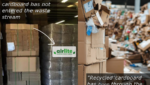
Airlite is made from pre-consumer cardboard — clean paper-based material that has never been used or contaminated. Airlite cardboard is free of inks, dyes, sprays and other substances picked up by cardboard that’s been through the consumer waste stream.
Why is cardboard bedding better for my horse’s respiratory health?
Respiratory problems affect over 80% of active horses — often without visible symptoms — and the primary cause is particulate dust in the stable environment. Cardboard bedding is virtually dust-free, eliminating the tiny inhalable particles that damage airways over time. It is vet-recommended for horses with existing respiratory conditions and is endorsed in the Inflammatory Airway Disease of Horses — Revised Consensus Statement as a key preventive measure.
How absorbent is Airlite compared to wood shavings?
Airlite is up to 5 times more absorbent than wood shavings. Its moisture-wicking properties keep the top layer of bedding dry, reducing ammonia buildup and odor. Users consistently report removing a third to half as much soiled bedding per day compared to shavings, even if the upfront per-bag price is higher.
Is cardboard bedding good for horses with allergies?
Yes — it’s one of the primary reasons horse owners switch. Airlite is free of the dust, mold spores, and allergens that conventional bedding introduces into a horse’s breathing zone. Veterinarians at Auburn University’s College of Veterinary Medicine use Airlite for all horses with respiratory conditions, preferring environmental management over continuous medication. Multiple elite riders report fewer coughs, less nasal discharge, and fewer skin reactions after switching.
Can cardboard bedding be composted?
Absolutely. Clean, pre-consumer cardboard is an ideal composting material. Because Airlite contains no chemical treatments or contaminants, soiled bedding breaks down efficiently and produces high-quality compost — making it one of the most environmentally responsible horse bedding options available.
Where can I buy Airlite Cardboard Bedding?
Airlite is available through GreenHorseBrands retailers at prices ranging from $8.99–$12.99 per 20-lb bag (Medium) and $16.99–$22.99 per 30-lb bag (Standard). Volume pricing is available directly from Green Horse Brands. Visit greenhorsebrands.com to find a retailer or request a direct quote.